
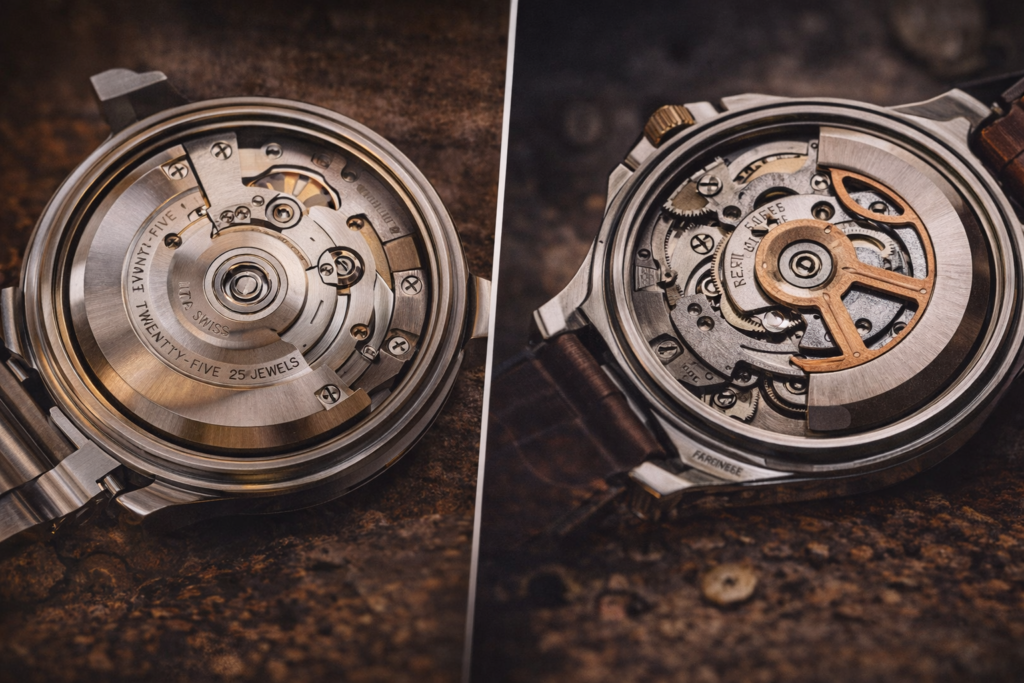
ETA vs In-House Movement Explained: What Every Watch Buyer Should Know
When exploring the world of luxury timepieces, one of the most important yet often overlooked aspects is the movement inside the watch. While design and brand recognition play a significant role in purchase decisions, the true essence of a watch lies in its mechanism.
If you are considering investing in premium swiss watches, understanding the difference between ETA and in-house movements will help you make a smarter and more informed choice. Whether you’re a beginner or a watch enthusiast, this guide breaks down everything you need to know in a clear, practical, and engaging way.
What Is a Watch Movement?
A watch movement, also known as a caliber, is the engine that powers the watch. It is responsible for keeping time and driving all functions such as hours, minutes, seconds, and additional features like chronographs or date displays.
Movements are generally classified into three categories:
- Mechanical (manual winding)
- Automatic (self-winding)
- Quartz (battery-powered)
In the world of mechanical and automatic watches, two major types dominate the discussion: ETA movements and in-house movements.
What Is an ETA Movement?
ETA is a Swiss movement manufacturer that supplies watch movements to numerous brands across the industry. It is part of the Swatch Group and has been a cornerstone of Swiss watchmaking for decades.
ETA movements are known for their reliability, consistency, and wide adoption across various watch brands. Many well-known brands use ETA movements as a foundation and often modify or decorate them to align with their brand identity.
Key Characteristics of ETA Movements
- Mass-produced but highly reliable
- Easy to service and repair
- Cost-effective compared to in-house calibers
- Widely used across multiple brands
- Proven track record of accuracy
ETA movements are often found in entry-level to mid-range swiss watches, making them an excellent choice for those seeking performance without paying a premium for exclusivity.
What Is an In-House Movement?
An in-house movement is developed, designed, and manufactured entirely by the watch brand itself. These movements represent a brand’s technical expertise and commitment to craftsmanship.
Brands that produce in-house movements invest heavily in research, innovation, and manufacturing capabilities. As a result, these watches are often considered more prestigious.
Key Characteristics of In-House Movements
- Designed and manufactured internally
- Higher level of exclusivity
- Advanced engineering and innovation
- Often more expensive
- Limited production
In-house movements are commonly found in high-end luxury watches, where brand heritage and craftsmanship are key selling points.
ETA vs In-House Movement: Core Differences
Understanding the practical differences between these two movement types can help you choose the right watch based on your needs and budget.
1. Manufacturing Approach
ETA movements are mass-produced and supplied to multiple brands, while in-house movements are exclusive to a single brand. This exclusivity often adds to the value and appeal of in-house watches.
2. Cost Factor
Watches with ETA movements are generally more affordable because production costs are lower. In contrast, in-house movements require significant investment, which reflects in the final price.
3. Reliability
ETA movements have a long-standing reputation for reliability. Since they are widely used and tested, they offer consistent performance.
In-house movements can also be highly reliable, but their performance may vary depending on the brand and its level of expertise.
4. Service and Maintenance
ETA movements are easier to service because watchmakers around the world are familiar with them and spare parts are readily available.
In-house movements, on the other hand, may require specialized servicing from authorized centers, which can be more expensive and time-consuming.
5. Prestige and Branding
In-house movements are often associated with prestige and exclusivity. Owning a watch with an in-house movement can feel more special due to its uniqueness.
ETA movements, while less exclusive, still offer excellent functionality and value.
Understanding the practical differences between these two movement types can help you choose the right watch based on your needs and budget.
1. Manufacturing Approach
ETA movements are mass-produced and supplied to multiple brands, while in-house movements are exclusive to a single brand. This exclusivity often adds to the value and appeal of in-house watches.
2. Cost Factor
Watches with ETA movements are generally more affordable because production costs are lower. In contrast, in-house movements require significant investment, which reflects in the final price.
3. Reliability
ETA movements have a long-standing reputation for reliability. Since they are widely used and tested, they offer consistent performance.
In-house movements can also be highly reliable, but their performance may vary depending on the brand and its level of expertise.
4. Service and Maintenance
ETA movements are easier to service because watchmakers around the world are familiar with them and spare parts are readily available.
In-house movements, on the other hand, may require specialized servicing from authorized centers, which can be more expensive and time-consuming.
5. Prestige and Branding
In-house movements are often associated with prestige and exclusivity. Owning a watch with an in-house movement can feel more special due to its uniqueness.
ETA movements, while less exclusive, still offer excellent functionality and value.
Understanding the practical differences between these two movement types can help you choose the right watch based on your needs and budget.
1. Manufacturing Approach
ETA movements are mass-produced and supplied to multiple brands, while in-house movements are exclusive to a single brand. This exclusivity often adds to the value and appeal of in-house watches.
2. Cost Factor
Watches with ETA movements are generally more affordable because production costs are lower. In contrast, in-house movements require significant investment, which reflects in the final price.
3. Reliability
ETA movements have a long-standing reputation for reliability. Since they are widely used and tested, they offer consistent performance.
In-house movements can also be highly reliable, but their performance may vary depending on the brand and its level of expertise.
4. Service and Maintenance
ETA movements are easier to service because watchmakers around the world are familiar with them and spare parts are readily available.
In-house movements, on the other hand, may require specialized servicing from authorized centers, which can be more expensive and time-consuming.
5. Prestige and Branding
In-house movements are often associated with prestige and exclusivity. Owning a watch with an in-house movement can feel more special due to its uniqueness.
ETA movements, while less exclusive, still offer excellent functionality and value.
Which Movement Is Better for You?
The answer depends entirely on your priorities as a buyer.
Choose ETA Movement If:
- You want a reliable and affordable watch
- You prefer easy maintenance
- You are new to mechanical watches
- You value practicality over exclusivity
Choose In-House Movement If:
- You appreciate craftsmanship and innovation
- You want exclusivity and brand prestige
- You are a collector or enthusiast
- Budget is not a major concern
For many buyers in India, ETA-based watches offer the perfect balance between performance and affordability.
How Movement Impacts Your Buying Decision
When purchasing a watch, especially online, it is important to go beyond the design and brand name. The movement plays a crucial role in determining the watch’s durability, accuracy, and long-term value.
Many buyers today explore multiple options before they buy swiss watches online india, comparing not just styles but also technical specifications.
A well-informed decision ensures that you get the best value for your investment.
The Role of Design vs Movement in Modern Watch Buying
While movement is important, modern buyers often prioritize design, versatility, and lifestyle compatibility.
This is where different categories of watches come into play.
Some buyers prefer original luxury watches with in-house movements, while others explore alternatives like first copy watches that offer similar aesthetics at a more accessible price.
Similarly, replica swiss watches have gained popularity among style-focused buyers who want the look and feel of luxury watches without the high investment.
Ultimately, the right choice depends on your personal preferences, budget, and expectations from the watch.
Why Movement Still Matters
Even though design plays a major role, movement remains the heart of any watch. A well-crafted movement ensures:
- Accurate timekeeping
- Smooth functionality
- Long-term durability
- Better overall performance
Whether you choose an ETA or in-house movement, understanding its role helps you appreciate the craftsmanship behind the watch.
SwissReplicaHub: Making Luxury Style Accessible
For buyers who admire luxury watch designs but seek affordability, Swissreplicahub offers a curated collection of stylish timepieces inspired by high-end brands.
The platform focuses on delivering visually premium designs that cater to modern buyers who value both aesthetics and practicality.
With a growing demand for swiss watches in India, platforms like Swissreplicahub provide an accessible way to explore luxury-inspired designs without compromising on style.
Final Thoughts
The debate between ETA and in-house movements is not about which one is universally better—it is about what suits your needs.
ETA movements offer reliability, affordability, and ease of maintenance, making them ideal for everyday wear. In-house movements, on the other hand, bring exclusivity, innovation, and prestige, appealing to collectors and luxury enthusiasts.
As the Indian market continues to grow, more buyers are becoming aware of these technical differences and making informed decisions.
Whether you are investing in high-end watches or exploring stylish alternatives, understanding the movement inside your watch adds depth to your purchase and enhances your overall experience.
At the end of the day, a watch is more than just a timekeeping device—it is a reflection of your personality, taste, and lifestyle.


Pingback: Patek Philippe Nautilus Buying Guide – Luxury Watch Buying Guide